BLOGS
BLOGS

Lyme Disease in Central PA: What Every Family Should Know
If you've spent any time hiking the trails around Hershey, letting the kids play in the backyard in Hummelstown, or exploring the wooded edges of parks in Harrisburg or Mechanicsburg this summer, you've probably thought about ticks. You should. Pennsylvania isn't just in a Lyme disease hotspot — it is the hotspot.
The good news: Lyme disease is very treatable when it's caught early. The even better news: most cases are preventable. This post walks you through what you need to know right now, in the middle of peak tick season in Central Pennsylvania.
What Is Lyme Disease?
Lyme disease is a bacterial infection caused by Borrelia burgdorferi, a spiral-shaped bacterium. It spreads to people through the bite of infected blacklegged ticks — also called deer ticks (Ixodes scapularis). These ticks are tiny. Nymphs (juvenile ticks that are especially active right now in July) are roughly the size of a poppy seed, which makes them very easy to miss.
Lyme disease is not new, and it's not rare. The CDC estimates approximately 476,000 people may be diagnosed and treated for Lyme disease each year in the United States, making it the most commonly reported vector-borne disease in the country. And a significant share of those cases are right here in our state.
Why Central Pennsylvania Is a Hotspot
Pennsylvania is not just a high-risk state for Lyme disease — it consistently ranks at or near the top nationally. Penn State Extension reports that Pennsylvania ranks number one in the country for Lyme disease cases, accounting for roughly 30% of all recorded cases nationwide. In 2023 alone, the state reported more than 16,000 confirmed cases.
The Pennsylvania Medical Society notes that Pennsylvania is designated by the CDC as a high-incidence state for Lyme disease, meaning it has averaged at least 10 confirmed cases per 100,000 people for three consecutive years. All 67 counties in the state — including Dauphin County, where Hershey and Hummelstown are located — have both established blacklegged tick populations and documented Lyme disease cases.
Timing matters too. The Pennsylvania Department of Health reports that 61% of cases are reported between May and August, which means July is squarely inside peak season. Tick nymphs are most active during this window, and because they're so small, many people never even feel the bite.
Symptoms: What to Watch For
Lyme disease progresses through stages. Catching it early — in the first stage — is the key to a rapid, complete recovery.
Early symptoms (3 to 30 days after a bite):
- A slowly expanding skin rash called erythema migrans (EM) — occurs in about 70–80% of cases
- Fever and chills
- Headache
- Fatigue
- Muscle and joint aches
- Swollen lymph nodes
A note on the rash: you've probably heard about the "bull's-eye" pattern, and it does exist — but it's actually less common than many people think. The rash is more often a solid red or brownish oval that simply expands outward. According to the Pennsylvania Department of Health, the bull's-eye appearance is not the most common presentation. Any expanding red rash appearing days to a month after a possible tick bite in a wooded area deserves a call to your doctor — don't wait for it to look like a target.
If Lyme disease goes untreated, the infection can spread and cause more serious problems:
- Swollen, painful joints — especially the knees (Lyme arthritis)
- Facial palsy (drooping on one or both sides of the face)
- Heart rhythm problems (Lyme carditis)
- Neurological symptoms — numbness, shooting pain, meningitis
- Short-term memory problems
These later-stage symptoms can appear weeks to months after the initial infection. NIH StatPearls notes that many patients with Lyme disease have no memory of a tick bite or a rash, which is one reason the diagnosis sometimes gets missed.
What the Research Says About Tick Attachment Time
Here's one of the most important pieces of information you can have going into tick season: how quickly does a tick actually transmit Lyme disease?
The 2020 IDSA/AAN/ACR clinical practice guidelines state that "experimental studies in animals have established that there is a time delay between the onset of tick feeding and transmission of B. burgdorferi that occurs after 36–48 hours of attachment." The FDA similarly advises that in most cases, a tick needs to be attached for 36 to 48 hours or more before transmission can occur.
What does that mean for you? It means daily tick checks and prompt removal are among the most powerful things you can do. If you find and remove a tick within 24 hours, your risk of getting Lyme disease drops dramatically. That said, other tick-borne illnesses — including anaplasmosis and Powassan virus — can be transmitted more quickly, so prompt removal matters for those too.
Proven Ways to Prevent Tick Bites
The CDC recommends a layered approach to tick bite prevention. Here's what the evidence supports:
Before you go outside:
- Treat clothing and gear with 0.5% permethrin. Permethrin is an EPA-registered insecticide that kills ticks on contact and stays effective through several washings. Research from the University of Rhode Island and CDC found that people wearing permethrin-treated sneakers and socks were 73.6 times less likely to be bitten by a tick than those wearing untreated footwear. You can buy pre-treated clothing or treat your own — just apply it outdoors and let it fully dry before wearing.
- Apply EPA-registered insect repellent to exposed skin. Products containing DEET, picaridin, IR3535, or oil of lemon eucalyptus are effective options. Follow the label. When used as directed, these are safe for pregnant and breastfeeding women. Note: do not use oil of lemon eucalyptus products on children under 3 years old.
- Wear light-colored clothing — long sleeves and pants if possible. Tuck your pants into your socks. Light colors make it easier to spot ticks.
- Walk in the center of trails. Ticks don't jump or fly. They perch on grass blades and shrubs, waiting to grab onto a passing host.
After you come inside:
- Shower within two hours. The CDC has found this reduces the risk of Lyme disease transmission — it helps wash off unattached ticks and gives you a chance to do a quick scan.
- Tumble dry clothes on high heat for 10 minutes. Ticks can survive a cold wash. High heat kills them.
- Do a full-body tick check. Pay special attention to the scalp, behind the ears, underarms, around the waist, behind the knees, and between the toes. Check your children and your pets — ticks can hitch a ride indoors on animals.
What to Do After a Tick Bite
Stay calm. Finding a tick doesn't mean you'll get Lyme disease — but it does mean you should act quickly and smartly.
Remove it properly: Use fine-tipped tweezers to grasp the tick as close to your skin as possible. Pull upward with steady, even pressure — no jerking or twisting. Clean the bite area and your hands with rubbing alcohol or soap and water afterward. Don't crush the tick with your fingers.
After removal, note:
- When and where you found the tick (the location on your body and where you were outdoors)
- Whether it appeared engorged (swollen/puffy) — this is a sign it had been feeding for a while
Call your doctor if: The tick appears to have been attached for 36 hours or more (or you're not sure), especially if you're in a high-Lyme area like Central Pennsylvania. The Pennsylvania Department of Health notes that a single dose of a specific antibiotic — when given within 72 hours of tick removal — has been shown to be up to 90% effective at preventing Lyme disease under the right circumstances. Your provider at Three Angels Family Practice will help you determine whether that's appropriate for your situation.
When to See Your Doctor
Don't wait for a classic bull's-eye rash. Call your doctor if you:
- Develop any expanding skin rash — any shape — after a possible tick bite
- Have flu-like symptoms (fever, headache, fatigue, body aches) in the summer months, when the flu is rare in Central PA
- Notice joint swelling, unusual heart palpitations, facial drooping, or neurological changes weeks or months after a tick bite
- Found an engorged tick and aren't sure how long it was attached
The Pennsylvania Department of Health notes that in Pennsylvania, Lyme disease can be diagnosed from the appearance of an EM rash alone — you don't always need to wait for lab results to begin treatment. Early treatment with antibiotics leads to rapid, complete recovery in the large majority of cases.
How Three Angels Family Practice Approaches Tick-Borne Disease
At Three Angels Family Practice & Wellness Center in Hershey, Dr. Danette J. Joseph, MD, takes a whole-person, integrative approach to care — including protecting your family during tick season. As a board-certified family medicine physician with more than a decade of practice in Central Pennsylvania, Dr. Joseph understands the regional risks her patients face. She can evaluate a tick bite, review your risk factors, and help you decide whether monitoring for symptoms or a more proactive step is the right move for you.
Lyme disease is one of those conditions where your primary care relationship genuinely matters. Having a provider who knows you — your health history, your medications, whether your child has allergies — means faster, more personalized decisions. If you've found a tick, noticed a suspicious rash, or experienced a summer flu that doesn't make sense, don't search the internet and spiral. Call us.
We serve patients across Hershey, Hummelstown, Harrisburg, Palmyra, Middletown, Elizabethtown, Mechanicsburg, and the surrounding communities of Central Pennsylvania.
Talk with Dr. Joseph
If you'd like to discuss tick bite evaluation or Lyme disease prevention with Dr. Danette J. Joseph, MD, our board-certified family medicine physician at Three Angels Family Practice & Wellness Center in Hershey, PA, we're welcoming new patients. We also serve families in Hummelstown, Harrisburg, Palmyra, and Mechanicsburg.
Request an appointment online or call (717) 298-1268.
Medical disclaimer: This article is for general educational purposes and does not constitute medical advice, diagnosis, or treatment. Always consult a qualified healthcare provider with questions about a medical condition or before starting, stopping, or changing any treatment. Reading this article does not create a physician-patient relationship with Dr. Danette J. Joseph, MD, or Three Angels Family Practice & Wellness Center.

Lyme Disease in Central PA: What Every Family Should Know
If you've spent any time hiking the trails around Hershey, letting the kids play in the backyard in Hummelstown, or exploring the wooded edges of parks in Harrisburg or Mechanicsburg this summer, you've probably thought about ticks. You should. Pennsylvania isn't just in a Lyme disease hotspot — it is the hotspot.
The good news: Lyme disease is very treatable when it's caught early. The even better news: most cases are preventable. This post walks you through what you need to know right now, in the middle of peak tick season in Central Pennsylvania.
What Is Lyme Disease?
Lyme disease is a bacterial infection caused by Borrelia burgdorferi, a spiral-shaped bacterium. It spreads to people through the bite of infected blacklegged ticks — also called deer ticks (Ixodes scapularis). These ticks are tiny. Nymphs (juvenile ticks that are especially active right now in July) are roughly the size of a poppy seed, which makes them very easy to miss.
Lyme disease is not new, and it's not rare. The CDC estimates approximately 476,000 people may be diagnosed and treated for Lyme disease each year in the United States, making it the most commonly reported vector-borne disease in the country. And a significant share of those cases are right here in our state.
Why Central Pennsylvania Is a Hotspot
Pennsylvania is not just a high-risk state for Lyme disease — it consistently ranks at or near the top nationally. Penn State Extension reports that Pennsylvania ranks number one in the country for Lyme disease cases, accounting for roughly 30% of all recorded cases nationwide. In 2023 alone, the state reported more than 16,000 confirmed cases.
The Pennsylvania Medical Society notes that Pennsylvania is designated by the CDC as a high-incidence state for Lyme disease, meaning it has averaged at least 10 confirmed cases per 100,000 people for three consecutive years. All 67 counties in the state — including Dauphin County, where Hershey and Hummelstown are located — have both established blacklegged tick populations and documented Lyme disease cases.
Timing matters too. The Pennsylvania Department of Health reports that 61% of cases are reported between May and August, which means July is squarely inside peak season. Tick nymphs are most active during this window, and because they're so small, many people never even feel the bite.
Symptoms: What to Watch For
Lyme disease progresses through stages. Catching it early — in the first stage — is the key to a rapid, complete recovery.
Early symptoms (3 to 30 days after a bite):
- A slowly expanding skin rash called erythema migrans (EM) — occurs in about 70–80% of cases
- Fever and chills
- Headache
- Fatigue
- Muscle and joint aches
- Swollen lymph nodes
A note on the rash: you've probably heard about the "bull's-eye" pattern, and it does exist — but it's actually less common than many people think. The rash is more often a solid red or brownish oval that simply expands outward. According to the Pennsylvania Department of Health, the bull's-eye appearance is not the most common presentation. Any expanding red rash appearing days to a month after a possible tick bite in a wooded area deserves a call to your doctor — don't wait for it to look like a target.
If Lyme disease goes untreated, the infection can spread and cause more serious problems:
- Swollen, painful joints — especially the knees (Lyme arthritis)
- Facial palsy (drooping on one or both sides of the face)
- Heart rhythm problems (Lyme carditis)
- Neurological symptoms — numbness, shooting pain, meningitis
- Short-term memory problems
These later-stage symptoms can appear weeks to months after the initial infection. NIH StatPearls notes that many patients with Lyme disease have no memory of a tick bite or a rash, which is one reason the diagnosis sometimes gets missed.
What the Research Says About Tick Attachment Time
Here's one of the most important pieces of information you can have going into tick season: how quickly does a tick actually transmit Lyme disease?
The 2020 IDSA/AAN/ACR clinical practice guidelines state that "experimental studies in animals have established that there is a time delay between the onset of tick feeding and transmission of B. burgdorferi that occurs after 36–48 hours of attachment." The FDA similarly advises that in most cases, a tick needs to be attached for 36 to 48 hours or more before transmission can occur.
What does that mean for you? It means daily tick checks and prompt removal are among the most powerful things you can do. If you find and remove a tick within 24 hours, your risk of getting Lyme disease drops dramatically. That said, other tick-borne illnesses — including anaplasmosis and Powassan virus — can be transmitted more quickly, so prompt removal matters for those too.
Proven Ways to Prevent Tick Bites
The CDC recommends a layered approach to tick bite prevention. Here's what the evidence supports:
Before you go outside:
- Treat clothing and gear with 0.5% permethrin. Permethrin is an EPA-registered insecticide that kills ticks on contact and stays effective through several washings. Research from the University of Rhode Island and CDC found that people wearing permethrin-treated sneakers and socks were 73.6 times less likely to be bitten by a tick than those wearing untreated footwear. You can buy pre-treated clothing or treat your own — just apply it outdoors and let it fully dry before wearing.
- Apply EPA-registered insect repellent to exposed skin. Products containing DEET, picaridin, IR3535, or oil of lemon eucalyptus are effective options. Follow the label. When used as directed, these are safe for pregnant and breastfeeding women. Note: do not use oil of lemon eucalyptus products on children under 3 years old.
- Wear light-colored clothing — long sleeves and pants if possible. Tuck your pants into your socks. Light colors make it easier to spot ticks.
- Walk in the center of trails. Ticks don't jump or fly. They perch on grass blades and shrubs, waiting to grab onto a passing host.
After you come inside:
- Shower within two hours. The CDC has found this reduces the risk of Lyme disease transmission — it helps wash off unattached ticks and gives you a chance to do a quick scan.
- Tumble dry clothes on high heat for 10 minutes. Ticks can survive a cold wash. High heat kills them.
- Do a full-body tick check. Pay special attention to the scalp, behind the ears, underarms, around the waist, behind the knees, and between the toes. Check your children and your pets — ticks can hitch a ride indoors on animals.
What to Do After a Tick Bite
Stay calm. Finding a tick doesn't mean you'll get Lyme disease — but it does mean you should act quickly and smartly.
Remove it properly: Use fine-tipped tweezers to grasp the tick as close to your skin as possible. Pull upward with steady, even pressure — no jerking or twisting. Clean the bite area and your hands with rubbing alcohol or soap and water afterward. Don't crush the tick with your fingers.
After removal, note:
- When and where you found the tick (the location on your body and where you were outdoors)
- Whether it appeared engorged (swollen/puffy) — this is a sign it had been feeding for a while
Call your doctor if: The tick appears to have been attached for 36 hours or more (or you're not sure), especially if you're in a high-Lyme area like Central Pennsylvania. The Pennsylvania Department of Health notes that a single dose of a specific antibiotic — when given within 72 hours of tick removal — has been shown to be up to 90% effective at preventing Lyme disease under the right circumstances. Your provider at Three Angels Family Practice will help you determine whether that's appropriate for your situation.
When to See Your Doctor
Don't wait for a classic bull's-eye rash. Call your doctor if you:
- Develop any expanding skin rash — any shape — after a possible tick bite
- Have flu-like symptoms (fever, headache, fatigue, body aches) in the summer months, when the flu is rare in Central PA
- Notice joint swelling, unusual heart palpitations, facial drooping, or neurological changes weeks or months after a tick bite
- Found an engorged tick and aren't sure how long it was attached
The Pennsylvania Department of Health notes that in Pennsylvania, Lyme disease can be diagnosed from the appearance of an EM rash alone — you don't always need to wait for lab results to begin treatment. Early treatment with antibiotics leads to rapid, complete recovery in the large majority of cases.
How Three Angels Family Practice Approaches Tick-Borne Disease
At Three Angels Family Practice & Wellness Center in Hershey, Dr. Danette J. Joseph, MD, takes a whole-person, integrative approach to care — including protecting your family during tick season. As a board-certified family medicine physician with more than a decade of practice in Central Pennsylvania, Dr. Joseph understands the regional risks her patients face. She can evaluate a tick bite, review your risk factors, and help you decide whether monitoring for symptoms or a more proactive step is the right move for you.
Lyme disease is one of those conditions where your primary care relationship genuinely matters. Having a provider who knows you — your health history, your medications, whether your child has allergies — means faster, more personalized decisions. If you've found a tick, noticed a suspicious rash, or experienced a summer flu that doesn't make sense, don't search the internet and spiral. Call us.
We serve patients across Hershey, Hummelstown, Harrisburg, Palmyra, Middletown, Elizabethtown, Mechanicsburg, and the surrounding communities of Central Pennsylvania.
Talk with Dr. Joseph
If you'd like to discuss tick bite evaluation or Lyme disease prevention with Dr. Danette J. Joseph, MD, our board-certified family medicine physician at Three Angels Family Practice & Wellness Center in Hershey, PA, we're welcoming new patients. We also serve families in Hummelstown, Harrisburg, Palmyra, and Mechanicsburg.
Request an appointment online or call (717) 298-1268.
Medical disclaimer: This article is for general educational purposes and does not constitute medical advice, diagnosis, or treatment. Always consult a qualified healthcare provider with questions about a medical condition or before starting, stopping, or changing any treatment. Reading this article does not create a physician-patient relationship with Dr. Danette J. Joseph, MD, or Three Angels Family Practice & Wellness Center.
LOCATION
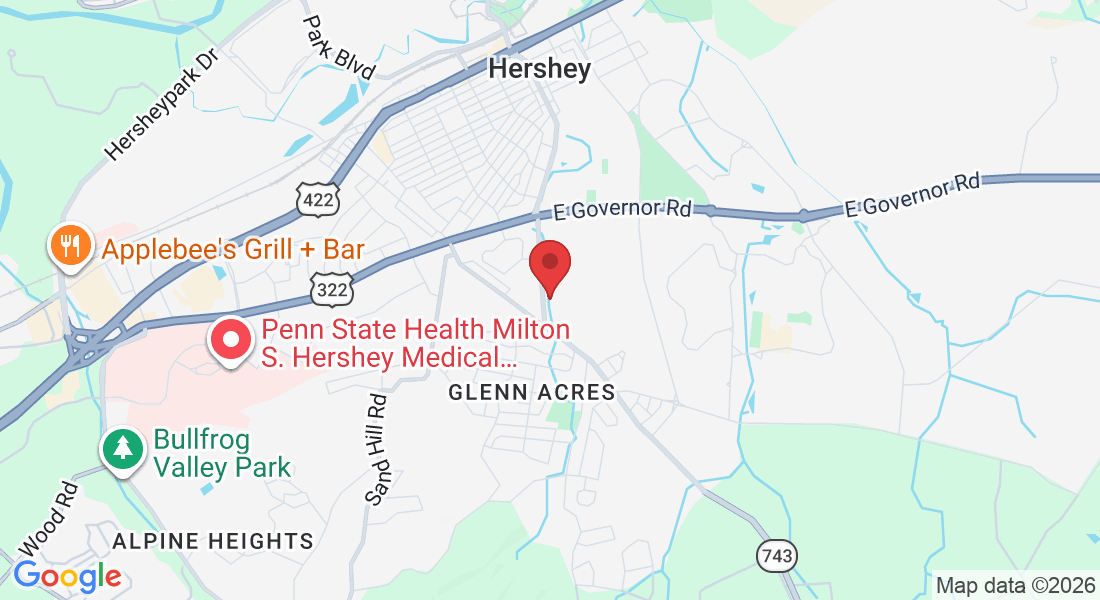
1249 Cocoa Avenue, Suite 190
Hershey, PA 17033
Phone: (717) 882-5888
OFFICE HOURS
By Appointment Only. Call for Availability
GET IN TOUCH
© Copyright 2023. Three Angels Family Practice & Wellness Center | Sitemap | Accessibility
Powered by Cima Growth Solutions
LOCATION
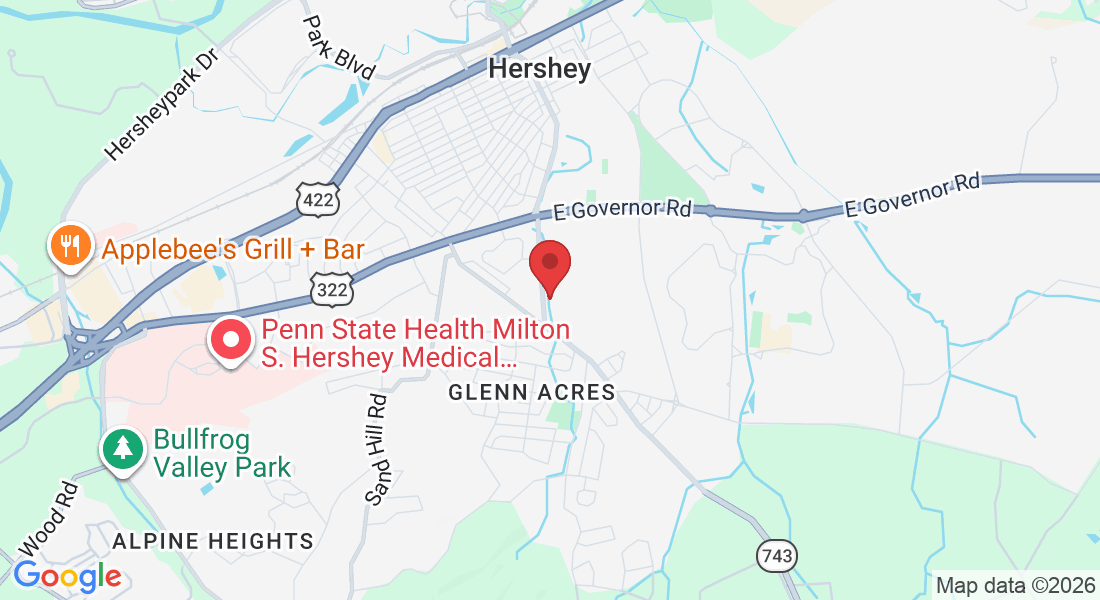
1249 Cocoa Avenue, Suite 190
Hershey, PA 17033
Phone: (717) 882-5888
OFFICE HOURS
By Appointment Only
Call (717) 882-5888
GET IN TOUCH
© Copyright 2023. Three Angels Family Practice & Wellness Center | Sitemap | Accessibility
Powered by Cima Growth Solutions